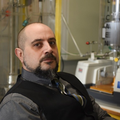
The fine chemical industry faces increasing pressure to adopt more sustainable, selective, and atom-efficient synthetic routes. Single-atom catalysts (SACs) are a disruptive solution, combining the precision of molecular catalysts with the robustness and reusability of solid materials. Building on this potential, our group is developing SACs that do more than just mimic homogeneous sites: they adapt, switch reactivity modes, and enable new transformations that were previously challenging or inaccessible in heterogeneous systems. This lecture outlines our journey through the design, application, and understanding of SACs in the context of scalable, sustainable fine chemical manufacturing. The lecture will begin by elucidating the local coordination of isolated metal atoms (Zn, Cu, Ni, Ag, Pd, Ir) through XAS, FTIR, aberration-corrected STEM, and DFT, revealing well-defined and often unexpected geometries where support composition and texture dictate both dispersion and electronic properties. This precise understanding of structure enables the rational deployment of SACs across a broad range of reactions, including CO2-assisted cycloaddition, light-driven pollutant degradation, C–O/C–C coupling, click chemistry, and C–S coupling, outperforming conventional catalysts by enabling isolated, selective, and tunable reactivity under mild conditions. Key to their function are confinement effects, charge-transfer interactions, and coordination anisotropy. These insights culminate in adaptive systems like Pd SACs with switchable reactivity and a multifunctional Ir SAC that achieves selective reductive couplings, showcasing the unique capacity of SACs to deliver efficient and sustainable catalysis guided by atomic-scale design.
Seminars
at the Department of Physical and Macromolecular ChemistryDepartmental Seminars
The Seminars at the Department of Physical and Macromolecular Chemistry are back.
The Seminars will be led by guest speakers, renowned scientists from both domestic and foreign institutions, as well as the Department's Ph.D. and Master's students, all presenting unique and engaging topics.
The lectures take place on Wednesdays at 14:00 in lecture room CH3 located in the building of Chemical departments (Hlavova 8, Praha 2).
Confined Nucleation and Polymer Anchoring: A Biophysical View of the Centrosome
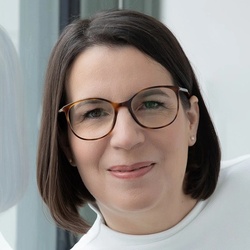
by Dr., Marketa Schmidt-Černohorská
The centrosome presents a material science paradox: how gigapascal-stiffness microtubules might be structurally anchored within a seemingly soft, viscoelastic hydrogel matrix. In the proposed talk, I will describe this organelle as a potential "supramolecular reactor“ and suggest how self-organization can confine reactants to modulate catalytic polymer nucleation. Furthermore, we discuss the hypothetical role of the centriole in guiding the orthogonal geometry and maintaining spindle integrity in cell division.
Lecture Hall CH3, Faculty of Science, Hlavova 8, Praha 2
March 11, 2026 - (14:00 )
The centrosome presents a material science paradox: how gigapascal-stiffness microtubules might be structurally anchored within a seemingly soft, viscoelastic hydrogel matrix. In the proposed talk, I will describe this organelle as a potential "supramolecular reactor“ and suggest how self-organization can confine reactants to modulate catalytic polymer nucleation. Furthermore, we discuss the hypothetical role of the centriole in guiding the orthogonal geometry and maintaining spindle integrity in cell division.
Lecture Hall CH3, Faculty of Science, Hlavova 8, Praha 2AI in Science
by Assoc. Prof., Viliam Lisý
- AI boom
- AI today
- How AI works and how to (co-)operate with it
- AI across the sciences
- ChatGPT, Claude, Gemini
- How to leverage AI in programming
- The future of AI
Lecture Hall CH3, Faculty of Science, Hlavova 8, Praha 2
March 18, 2026 - (14:00 )
- AI boom
- AI today
- How AI works and how to (co-)operate with it
- AI across the sciences
- ChatGPT, Claude, Gemini
- How to leverage AI in programming
- The future of AI
Antagonistic Nanoengineered Organic Frameworks for Flexible Electrochemistry
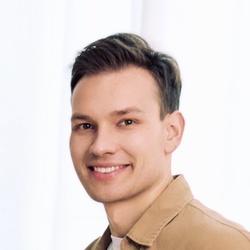
by Dr., Manmatha Mahato
Flexible electrochemical technologies–bendable batteries, wearable sensors, and soft robots–demand a rare combination: fast electronic transport for efficiency and ion-driven chemistry for energy storage, catalysis, and actuation. Most materials force a trade-off. Conductive Networks such as carbon nanotubes, graphene, and MXenes shuttle electrons rapidly but often offer limited redox-active chemistry. Many metal oxides provide high ionic charge storage and rich redox reactions, yet their poor conductivity constrains performance, especially in thin, flexible devices. This seminar presents a strategy to break this bottleneck using nano-engineered metal–organicframeworks and covalent–organic frameworks–crystalline, porous molecular scaffolds programmable at the building-block level. By tuning pore architecture, redox-active sites, and charge-transport pathways, we create frameworks where electrons and ions operate synergistically rather than competitively. The result is a versatile platform for high-density energy storage (batteries and supercapacitors), electrocatalysis, and electrochemical transduction in soft systems. We conclude with a real-world demonstration: near‑zero‑voltageartificial muscles–flexible actuators capable of lifting ~34× their own weight–
Lecture Hall CH3, Faculty of Science, Hlavova 8, Praha 2
March 25, 2026 - (14:00 )
Flexible electrochemical technologies–bendable batteries, wearable sensors, and soft robots–demand a rare combination: fast electronic transport for efficiency and ion-driven chemistry for energy storage, catalysis, and actuation. Most materials force a trade-off. Conductive Networks such as carbon nanotubes, graphene, and MXenes shuttle electrons rapidly but often offer limited redox-active chemistry. Many metal oxides provide high ionic charge storage and rich redox reactions, yet their poor conductivity constrains performance, especially in thin, flexible devices. This seminar presents a strategy to break this bottleneck using nano-engineered metal–organicframeworks and covalent–organic frameworks–crystalline, porous molecular scaffolds programmable at the building-block level. By tuning pore architecture, redox-active sites, and charge-transport pathways, we create frameworks where electrons and ions operate synergistically rather than competitively. The result is a versatile platform for high-density energy storage (batteries and supercapacitors), electrocatalysis, and electrochemical transduction in soft systems. We conclude with a real-world demonstration: near‑zero‑voltageartificial muscles–flexible actuators capable of lifting ~34× their own weight–
Mechanoresponsive Protein Motifs - from molecular mechanisms towards bioinspired materials
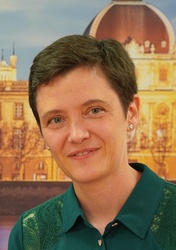
by Prof. Dr., Kerstin Blank
Proteins are essential building blocks of biogenic materials, forming both purely protein-based structures and composite materials where they mediate specific interactions with other biopolymers or mineral surfaces. Using single-molecule force spectroscopy, our goal is to establish fundamental sequence-structure-mechanics relationships of protein-protein and protein-surface interactions, and to utilize these for the bottom-up assembly of bioinspired materials. Focusing on a diverse array of structural protein motifs found in nature (e.g. coiled coils, chitin-binding and magnetite-binding proteins), we have unraveled the molecular factors that govern their mechanical stability and binding strength. This knowledge is used to build libraries of mechanically calibrated protein motifs, which serve as building blocks for mechanoresponsive materials with tunable properties. Ultimately, we aim to translate these molecular-level insights into materials with self-healing and self-reporting functions.
Lecture Hall CH3, Faculty of Science, Hlavova 8, Praha 2
April 1, 2026 - (14:00 )
Proteins are essential building blocks of biogenic materials, forming both purely protein-based structures and composite materials where they mediate specific interactions with other biopolymers or mineral surfaces. Using single-molecule force spectroscopy, our goal is to establish fundamental sequence-structure-mechanics relationships of protein-protein and protein-surface interactions, and to utilize these for the bottom-up assembly of bioinspired materials. Focusing on a diverse array of structural protein motifs found in nature (e.g. coiled coils, chitin-binding and magnetite-binding proteins), we have unraveled the molecular factors that govern their mechanical stability and binding strength. This knowledge is used to build libraries of mechanically calibrated protein motifs, which serve as building blocks for mechanoresponsive materials with tunable properties. Ultimately, we aim to translate these molecular-level insights into materials with self-healing and self-reporting functions.
Lecture Hall CH3, Faculty of Science, Hlavova 8, Praha 2Departmental Seminar
by Dr., Ondřej Veselý
Lecture Hall CH3, Faculty of Science, Hlavova 8, Praha 2
April 22, 2026 - (14:00 )
Molecular Quantum Materials from first Principles
by Dr., Bo Peng
Molecular building blocks provide a versatile platform for exploring the exotic quantum phases and complex many-body physics. Here we demonstrate a showcase system based on pure-carbon, defect-free, charge-neutral fullerene networks, which can be constructed from a molecular synthon with quantised spins due to symmetry. We report a rich variety of condensed matter models that are challenging to realise, including antiferromagnetic spin-1/2 chain in Janus fullerene nanoribbons, ferromagnetic Haldane fullerene monolayers, and altermagnetic Shastry-Sutherland fullerene networks that can be continuously tuned into a quantum spin liquid phase. Our findings open new a frontier for exploring quantum phenomena based on scalable, chemically-stable, molecular building units can potentially operate at room temperature.
Lecture Hall CH3, Faculty of Science, Hlavova 8, Praha 2
April 29, 2026 - (14:00 )
Molecular building blocks provide a versatile platform for exploring the exotic quantum phases and complex many-body physics. Here we demonstrate a showcase system based on pure-carbon, defect-free, charge-neutral fullerene networks, which can be constructed from a molecular synthon with quantised spins due to symmetry. We report a rich variety of condensed matter models that are challenging to realise, including antiferromagnetic spin-1/2 chain in Janus fullerene nanoribbons, ferromagnetic Haldane fullerene monolayers, and altermagnetic Shastry-Sutherland fullerene networks that can be continuously tuned into a quantum spin liquid phase. Our findings open new a frontier for exploring quantum phenomena based on scalable, chemically-stable, molecular building units can potentially operate at room temperature.
Lecture Hall CH3, Faculty of Science, Hlavova 8, Praha 2Photosensitizers
by doc. RNDr., Ph.D., Jiří Mosinger
Highly efficient antimicrobial polymer nanofiber membranes and nanoparticles that use inactivation of a pathogen via photosensitized generation of singlet oxygen will be presented. The antimicrobial mechanism includes excitation of the photosensitizer encapsulated or externally bounded to nanomaterials by visible light, formation of its triplet states followed by energy transfer to triplet oxygen leading to short-living singlet oxygen formation. Since singlet oxygen is a great oxidant of biological targets, the antibacterial and antiviral effect is very powerful. The singlet oxygen-sensitized delayed fluorescence of a photosensitizer can be observed and used as a sensitive tool for detection of oxygen, imaging of singlet oxygen and distribution of a photosensitizer. Modifications of nanomaterials enabling size selective inactivation of pathogens, generation of singlet oxygen via thermolysis of endoperoxides or photoproducing NO radical or I2 with the aim to increase their antimicrobial effect will be also mentioned.
Lecture Hall CH3, Faculty of Science, Hlavova 8, Praha 2
May 6, 2026 - (14:00 )
Highly efficient antimicrobial polymer nanofiber membranes and nanoparticles that use inactivation of a pathogen via photosensitized generation of singlet oxygen will be presented. The antimicrobial mechanism includes excitation of the photosensitizer encapsulated or externally bounded to nanomaterials by visible light, formation of its triplet states followed by energy transfer to triplet oxygen leading to short-living singlet oxygen formation. Since singlet oxygen is a great oxidant of biological targets, the antibacterial and antiviral effect is very powerful. The singlet oxygen-sensitized delayed fluorescence of a photosensitizer can be observed and used as a sensitive tool for detection of oxygen, imaging of singlet oxygen and distribution of a photosensitizer. Modifications of nanomaterials enabling size selective inactivation of pathogens, generation of singlet oxygen via thermolysis of endoperoxides or photoproducing NO radical or I2 with the aim to increase their antimicrobial effect will be also mentioned.
Lecture Hall CH3, Faculty of Science, Hlavova 8, Praha 2Presentations of new PhD students and postdocs
Presentations by new PhD students and postdocs at the departmental retreat in Liblice Castle (https://www.zamek-liblice.cz/en/).
May 20, 2026 - (09:00 )
Presentations by new PhD students and postdocs at the departmental retreat in Liblice Castle (https://www.zamek-liblice.cz/en/).
Liblice 61, 277 32 ByšiceSingle-Atom Catalysis for Greener Fine Chemical Synthesis
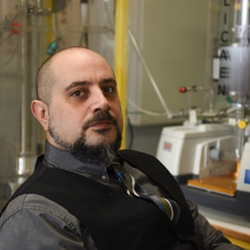
by Dr., Prof., Gianvito Vile
The fine chemical industry faces increasing pressure to adopt more sustainable, selective, and atom-efficient synthetic routes. Single-atom catalysts (SACs) are a disruptive solution, combining the precision of molecular catalysts with the robustness and reusability of solid materials. Building on this potential, our group is developing SACs that do more than just mimic homogeneous sites: they adapt, switch reactivity modes, and enable new transformations that were previously challenging or inaccessible in heterogeneous systems. This lecture outlines our journey through the design, application, and understanding of SACs in the context of scalable, sustainable fine chemical manufacturing. The lecture will begin by elucidating the local coordination of isolated metal atoms (Zn, Cu, Ni, Ag, Pd, Ir) through XAS, FTIR, aberration-corrected STEM, and DFT, revealing well-defined and often unexpected geometries where support composition and texture dictate both dispersion and electronic properties. This precise understanding of structure enables the rational deployment of SACs across a broad range of reactions, including CO2-assisted cycloaddition, light-driven pollutant degradation, C–O/C–C coupling, click chemistry, and C–S coupling, outperforming conventional catalysts by enabling isolated, selective, and tunable reactivity under mild conditions. Key to their function are confinement effects, charge-transfer interactions, and coordination anisotropy. These insights culminate in adaptive systems like Pd SACs with switchable reactivity and a multifunctional Ir SAC that achieves selective reductive couplings, showcasing the unique capacity of SACs to deliver efficient and sustainable catalysis guided by atomic-scale design.
Lecture Hall CH3, Faculty of Science, Hlavova 8, Praha 2
March 4, 2026 - (14:00 )
The fine chemical industry faces increasing pressure to adopt more sustainable, selective, and atom-efficient synthetic routes. Single-atom catalysts (SACs) are a disruptive solution, combining the precision of molecular catalysts with the robustness and reusability of solid materials. Building on this potential, our group is developing SACs that do more than just mimic homogeneous sites: they adapt, switch reactivity modes, and enable new transformations that were previously challenging or inaccessible in heterogeneous systems. This lecture outlines our journey through the design, application, and understanding of SACs in the context of scalable, sustainable fine chemical manufacturing. The lecture will begin by elucidating the local coordination of isolated metal atoms (Zn, Cu, Ni, Ag, Pd, Ir) through XAS, FTIR, aberration-corrected STEM, and DFT, revealing well-defined and often unexpected geometries where support composition and texture dictate both dispersion and electronic properties. This precise understanding of structure enables the rational deployment of SACs across a broad range of reactions, including CO2-assisted cycloaddition, light-driven pollutant degradation, C–O/C–C coupling, click chemistry, and C–S coupling, outperforming conventional catalysts by enabling isolated, selective, and tunable reactivity under mild conditions. Key to their function are confinement effects, charge-transfer interactions, and coordination anisotropy. These insights culminate in adaptive systems like Pd SACs with switchable reactivity and a multifunctional Ir SAC that achieves selective reductive couplings, showcasing the unique capacity of SACs to deliver efficient and sustainable catalysis guided by atomic-scale design.
Lecture Hall CH3, Faculty of Science, Hlavova 8, Praha 2Functional Polymers in Wood Materials Science
by Dr., Antoni Sánchez-Ferrer
Wood is a natural and renewable resource whose use has recently increased in fields such as civil construction, fiber production, and biopolymer development. Thanks to its hierarchical structure at different levels, wood can be utilized in new applications with the assistance of Polymer Science. At the macroscale, the use of adhesives, primers, and special physicochemical treatments for durability improves the quality of engineered wood products; at the microscale, thanks to its anisotropic and porous structure, filters, insulators, sensors, and actuators are produced for water purification, thermal insulation, and smart materials; and at the nanoscale, new biopolymers and nanoparticles are synthesized for the development of adhesives, fibers, films, foams, and composites. This makes Wood Materials Science a field where physicists, chemists, and engineers combine their knowledge to achieve more sustainable products and innovative applications.
Lecture Hall CH3, Faculty of Science, Hlavova 8, Praha 2
Feb. 25, 2026 - (14:00 )
Wood is a natural and renewable resource whose use has recently increased in fields such as civil construction, fiber production, and biopolymer development. Thanks to its hierarchical structure at different levels, wood can be utilized in new applications with the assistance of Polymer Science. At the macroscale, the use of adhesives, primers, and special physicochemical treatments for durability improves the quality of engineered wood products; at the microscale, thanks to its anisotropic and porous structure, filters, insulators, sensors, and actuators are produced for water purification, thermal insulation, and smart materials; and at the nanoscale, new biopolymers and nanoparticles are synthesized for the development of adhesives, fibers, films, foams, and composites. This makes Wood Materials Science a field where physicists, chemists, and engineers combine their knowledge to achieve more sustainable products and innovative applications.
Lecture Hall CH3, Faculty of Science, Hlavova 8, Praha 2Raman Microscopy of Crystalline Inclusions in Microalgae
by Doc. RNDr., Peter Mojzeš
Raman microscopy is a microscopic imaging method combining the molecular specificity of vibrational spectroscopy with the spatial resolution of confocal optical microscopy. Here, it will be presented as an exceptionally useful method for identifying the chemical nature of intracellular organelles and intracellular inclusions, and for chemical mapping of microorganisms. Recent methodological progress we have contributed to will be illustrated by selected examples of identifying the chemical composition of crystalline inclusions in photosynthetic microalgae. The advantages, perspectives, opportunities, and challenges of wider use of Raman microscopy in biological applications will also be highlighted, along with the limitations and pitfalls of this method.
Lecture Hall CH3, Faculty of Science, Hlavova 8, Praha 2
Feb. 18, 2026 - (14:00 )
Raman microscopy is a microscopic imaging method combining the molecular specificity of vibrational spectroscopy with the spatial resolution of confocal optical microscopy. Here, it will be presented as an exceptionally useful method for identifying the chemical nature of intracellular organelles and intracellular inclusions, and for chemical mapping of microorganisms. Recent methodological progress we have contributed to will be illustrated by selected examples of identifying the chemical composition of crystalline inclusions in photosynthetic microalgae. The advantages, perspectives, opportunities, and challenges of wider use of Raman microscopy in biological applications will also be highlighted, along with the limitations and pitfalls of this method.
Lecture Hall CH3, Faculty of Science, Hlavova 8, Praha 2
Seminar talk by Dr. Chaloupka (nanovlákna)
by Dr., Chaloupka
Lecture Hall CH3, Faculty of Science, Hlavova 8, Praha 2
Dec. 17, 2025 - (14:00 )
Presentations of 2nd year Mgr students
Lecture Hall CH3, Faculty of Science, Hlavova 8, Praha 2
Dec. 10, 2025 - (14:00 )
Presentations of 2nd year Mgr students
Lecture Hall CH3, Faculty of Science, Hlavova 8, Praha 2
Nov. 26, 2025 - (14:00 )
Polymer particles as contrast agents for photoacustic tomography
by Dr., M.Babic
Photoacoustic (PA) imaging detects an acoustic signal induced by light. This unique method provides simultaneously ultrasound anatomical information with high resolution along with a functional photoacoustic signal, which is created by transformation of a laser pulse to mechanical wave by some light absorbing chromophore. PA imaging shows great potential for various clinical procedures from diagnosis to therapy guidance, which arises from its ability to gather functional and molecular information in real-time regime with a high spatial resolution at clinically relevant depths together with the absence of ionizing beaming.
To maximize the contrast effect of the exogenous contrast agents (CA) in the living organism, the optical absorption of the CA should be optimally in the near-infrared (NIR) regions ~700 - 1100 nm and 1200 - 2000. We developed new heterogenous syntheses of polypyrrole (PPY) particles with PA contrast properties in NIR, which allow good control of size (10 nm step within the range 80-300 nm). Besides widely used linear water-soluble polymer stabilizers of the dispersion polymerizations, classical emulsifiers were also successfully employed in their synthesis, what broadens possibilities to employ less hydrophilic comonomers in the aqueous polymerization. Particles as CA for the PA were tested in vitro and in vivo.
Lecture Hall CH3, Faculty of Science, Hlavova 8, Praha 2
Nov. 19, 2025 - (14:00 )
Photoacoustic (PA) imaging detects an acoustic signal induced by light. This unique method provides simultaneously ultrasound anatomical information with high resolution along with a functional photoacoustic signal, which is created by transformation of a laser pulse to mechanical wave by some light absorbing chromophore. PA imaging shows great potential for various clinical procedures from diagnosis to therapy guidance, which arises from its ability to gather functional and molecular information in real-time regime with a high spatial resolution at clinically relevant depths together with the absence of ionizing beaming.
To maximize the contrast effect of the exogenous contrast agents (CA) in the living organism, the optical absorption of the CA should be optimally in the near-infrared (NIR) regions ~700 - 1100 nm and 1200 - 2000. We developed new heterogenous syntheses of polypyrrole (PPY) particles with PA contrast properties in NIR, which allow good control of size (10 nm step within the range 80-300 nm). Besides widely used linear water-soluble polymer stabilizers of the dispersion polymerizations, classical emulsifiers were also successfully employed in their synthesis, what broadens possibilities to employ less hydrophilic comonomers in the aqueous polymerization. Particles as CA for the PA were tested in vitro and in vivo.
Lecture Hall CH3, Faculty of Science, Hlavova 8, Praha 2Catalysis, medicine and house-of-cards: zeolites and MOFs in action.
by Prof., Barbara Gil
Zeolites and metal-organic frameworks (MOFs) are two important areas of modern porous material research, connecting the fields of catalysis, medicine, and functional design. Their distinctive structures, which range from strong, crystalline networks to the complex, modular structures of MOFs, allow for selective reactivity, molecular sieving, and new bio-interactions. For a long time, zeolites have been the best way to process hydrocarbons, cut down on emissions, and drive acid site-driven transformations in catalysis. MOFs, on the other hand, have customisable pore environments and metal-node functions that expand the substrate scope and catalytic possibilities. New uses for these materials in medicine include targeted drug delivery, imaging, and therapy platforms that take use of their adjustable porosity and biocompatibility. This talk will cover interdisciplinary roles of zeolites and MOFs on the examples of the work done by Zeolite Chemistry Group in Kraków.
Lecture Hall CH3, Faculty of Science, Hlavova 8, Praha 2
Nov. 12, 2025 - (14:00 )
Zeolites and metal-organic frameworks (MOFs) are two important areas of modern porous material research, connecting the fields of catalysis, medicine, and functional design. Their distinctive structures, which range from strong, crystalline networks to the complex, modular structures of MOFs, allow for selective reactivity, molecular sieving, and new bio-interactions. For a long time, zeolites have been the best way to process hydrocarbons, cut down on emissions, and drive acid site-driven transformations in catalysis. MOFs, on the other hand, have customisable pore environments and metal-node functions that expand the substrate scope and catalytic possibilities. New uses for these materials in medicine include targeted drug delivery, imaging, and therapy platforms that take use of their adjustable porosity and biocompatibility. This talk will cover interdisciplinary roles of zeolites and MOFs on the examples of the work done by Zeolite Chemistry Group in Kraków.
Lecture Hall CH3, Faculty of Science, Hlavova 8, Praha 2
UI - počítačová lingvistika
by Dr., N. Peterek
Nov. 5, 2025 - (14:00 )
Strengthening the resilience
by Dr., S.Hoskovcová
This seminar explores the concept of resilience as a crucial skill for success and well-being during postgraduate studies. Master’s and PhD programs often present unique challenges -- academic, emotional, and personal --- that test students’ perseverance and adaptability. Through a combination of research insights, practical strategies, and real-life experiences, this session aims to help participants understand the psychological and social factors that foster resilience in demanding academic environments. Attendees will gain information about tools for managing stress, maintaining motivation, balancing competing responsibilities, and developing a sustainable mindset for long-term scholarly and professional growth.
Lecture Hall CH3, Faculty of Science, Hlavova 8, Praha 2
Oct. 29, 2025 - (14:00 )
This seminar explores the concept of resilience as a crucial skill for success and well-being during postgraduate studies. Master’s and PhD programs often present unique challenges -- academic, emotional, and personal --- that test students’ perseverance and adaptability. Through a combination of research insights, practical strategies, and real-life experiences, this session aims to help participants understand the psychological and social factors that foster resilience in demanding academic environments. Attendees will gain information about tools for managing stress, maintaining motivation, balancing competing responsibilities, and developing a sustainable mindset for long-term scholarly and professional growth.
Lecture Hall CH3, Faculty of Science, Hlavova 8, Praha 2