
Open Positions

open post doctoral and PhD positions of the department

Open postdoc and PhD positions

The Faculty of Science, Charles University (Prague, Czech Republic) invites applications for a Post-doctoral position in the Department of Physical and Macromolecular Chemistry.
Koordinátor/ka náboru a administrativní pracovník/pracovnice sekretariátu katedry

Koordinátor/ka náboru a administrativní pracovník/pracovnice sekretariátu katedry

more
Published on 1 May 2025

Development of MXene-Based Hybrid Catalysts for Efficient Photo- electrochemical Hydrogen Production

This PhD research aims at the development of novel hybrid catalysts for hydrogen production through photo-electrochemical (PEC) water splitting, emphasizing innovative, cost-effective materials and novel composite architectures. The work will focus on exploring MXenes (2D transition metal carbides/nitrides) as non-precious metal co-catalysts in combination with photoactive materials like … more

Published on 27 Feb 2025

Theoretical study of chemical reaction mechanisms

Prof. RNDr., Ph.D., Filip Uhlík

The necessity of transitioning to a sustainable society entails minimizing the negative impacts of the chemical industry on the environment and the need to search for new chemical reactions and novel catalysts. Theoretical methods based on quantum chemistry and statistical thermodynamics are becoming important partners to experimental techniques due to … more

Published on 3 Feb 2025

Design of advanced catalytic materials by top-down construction and crystal structure nano-architectonics

Zeolites hold a key position as heterogeneous catalysts and adsorbents due to their high surface area, molecular sieving effect, and versatility in chemical composition and structural topology. However, the hydrothermal synthesis process traditionally employed for their preparation is complex and not yet fully understood. This complexity renders challenging the precise … more

Published on 3 Feb 2025

Functional Polymers and Boron-Based Nanostructures for Biomedical Applications

Ing., Ph.D., Mariusz Uchman

The project focuses on the development of advanced polymeric materials containing phenylboronic acids and boron clusters for biomedical applications. The work will involve the synthesis of well-defined block and branched polymers using controlled polymerization techniques such as RAFT, ATRP, ROP, or ROMP. These polymers will be designed to enable the … more

Published on 3 Feb 2025

Synthesis of smart polymer-coated nanomaterials for Pickering interfacial catalysis

Doc., RNDr., Ph.D., Ondřej Sedláček

Within the dissertation project, we will develop novel stimuli-responsive polymers for coating porous inorganic nanoparticles (e.g., zeolites) for catalytic and biomedical applications. In particular, the nanoparticles will be used to stabilize Pickering emulsions in Pickering interfacial catalysis. By application of stimuli (light, change of pH), the responsive polymer coating will … more

Published on 3 Feb 2025

Synthesis of advanced stimuli-responsive polymers for biomedical applications

Doc., RNDr., Ph.D., Ondřej Sedláček

This dissertation focuses on the design and synthesis of advanced stimuli-responsive polymers for biomedical applications, including polymer therapeutics and medical devices. By leveraging modern polymerization techniques (e.g., controlled radical polymerizations such as ATRP and RAFT) and exploring poly(2-oxazoline) systems, we aim to achieve precise control over polymer structure and function. … more

Published on 3 Feb 2025

Development of conjugated hyper-cross-linked porous organic polymers for sorption and catalytic applications

Doc. RNDr., Dr., Jan Sedláček

The aim of the dissertation project will be the design, development and optimization of new synthetic procedures for the preparation of sorptionally and catalytically active conjugated Porous Organic Polymers (POPs). The prepared amorphous POPs should combine porosity given by hyper-cross-linking with the so-called intrinsic porosity reflecting the rigidity and bulkiness … more

Published on 3 Feb 2025

Polymeric materials with covalently attached anionic boron clusters

prof. RNDr., Ph.D., Pavel Matějíček

Polymeric nanostructures containing anionic clusters are very promising because these nanosystems are capable of transferring or exchanging counterions. The resulting systems thus have great potential as ion-conducting materials in potential applications.
During the doctoral study, the student will master the basic methods of exoskeletal substitution of anionic boron cluster compounds … more

Published on 3 Feb 2025

Ionization of weak polyelectrolytes in the semidilute and entangled regimes

Ing., Ph.D., Lucie Nová

The relationship between ionization and morphology in weak polyelectrolyte systems is complex and is influenced by external conditions such as pH, ionic strength, and polymer concentration. While extensive studies have clarified the behavior of weak polyelectrolytes in dilute solutions, understanding their characteristics in the semidilute and concentrated regimes remains an … more

Published on 3 Feb 2025

Developing machine learning tools for reactive atomistic material modelling

RNDr., Ph.D., Lukaš Grajciar

Machine learning force fields (MLFFs):

- Generation of reference ab initio database of energy/force/stress data and/or data mining of thereof and/or combination of existing datasets via, e.g., multi-task learning (e.g., ala https://doi.org/10.26434/chemrxiv-2023-8n737)
- Training of machine learning force fields using deep neural networks (e.g., using equivariant message passing networks such … more

Published on 3 Feb 2025

Operando Modelling of porous catalytic nanomaterials via machine learning

Application of cutting edge machine-learning based methods in support of quantum chemistry calculations for enhanced sampling and analysis of catalytic porous materials (zeolites, MOFs, silicate derivatives) - towards bottom-up design of functional porous nanomaterials. Training, optimization and use of class-specific, reactive ML interatomic forcefields, combined with spectral characterization (NMR, FTIR, … more

Published on 3 Feb 2025

ML-assisted design and characterization of oxide-supported metal nano-catalysts

Use of ML-accelerated (and quantum chemistry-supported) simulations for bottom-up design of metal/metal-oxide cluster-based supported nanocatalysts for sustainable chemistry applications.The grand challenge in the field of supported nanocatalysts is to design materials with the maximum catalytic activity/selectivity, using the least catalytic material, while maintaining stability against deactivation. Single atom and sub-nanometre … more

Published on 3 Feb 2025

Postdoc position in Catalysis

prof. Ing., DrSc., Jiří Čejka

The Faculty of Science, Charles University (Prague, Czechia) invites applications for a Post-doctoral position in the Department of Physical and Macromolecular Chemistry.

The position is open for experimental chemist with strong background in physical chemistry and material science, ideally, expertise in heterogeneous catalysis. The research will focus on the application … more

Published on 12 Jun 2020

Postdoc position in Synthesis of two-dimensional materials

prof., RNDr., Ph.D., Petr Nachtigall

The Faculty of Science, Charles University (Prague, Czechia) invites applications for a Post-doctoral position in the Department of Physical and Macromolecular Chemistry.

The position is open for experimental chemist with strong background in material science, ideally, expertise in synthesis and characterization of 2D materials. The research will focus on synthesis … more

Published on 12 Jun 2020

Postdoc position in Synthesis of zeolites

prof. Ing., DrSc., Jiří Čejka

The Faculty of Science, Charles University (Prague, Czechia) invites applications for a Post-doctoral position in the Department of Physical and Macromolecular Chemistry.

The position is open for experimental chemist with strong background in material science, ideally, expertise in synthesis and characterization of zeolites and materials. The research will focus on … more

Published on 12 Jun 2020

PhD fellow in Hybrid Nanostructures Based on Polymer-Ions Interaction

prof. RNDr., Ph.D., Pavel Matějíček

Project summary

Highly charged molecules and nano-assemblies serve as unique building blocks in nanochemistry. Bulky and multivalent ions are known to readily condense on polyelectrolyte chains or brushes. Such ions are therefore capable to co-assemble with double-hydrophilic block copolymers into core/shell nanoparticles. It brings new function into the system and … more

Published on 7 Mar 2019

PhD fellow in Sugar and pH-responsive multicompartment nano-assemblies for dual-drug solubilization and delivery

Ing., Ph.D., Mariusz Uchman

Project summary

The concept of Multicompartment Micelles (MCMs), i. e., self-assembled aggregates with moieties of different chemical properties, that mimic biological molecules such as proteins was derived by Prof. H. Ringsdorf almost twenty years ago and theoretically described by de Gennes. Figure 1 represents a rather futuristic view of multifunctional … more

Published on 7 Mar 2019

PhD fellow in Theoretical studies of endohedral fullerenes

Prof. RNDr., Ph.D., Filip Uhlík

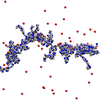
Endohedral fullerenes, i.e. cage-like hollow carbon molecules with an atom or a small molecule trapped inside, are fascinating species with unusual properties attractive for applications. With Gd atom inside they can serve as MRI contrast agents, with a radioactive metal as radiotracers, with N atom as q-bits in quantum computers, … more
Published on 7 Mar 2019

PhD fellow in Modeling of weak polyelectrolytes interacting with multivalent ions.

Doc. RNDr., Ph.D., Peter Košovan

Association of weak polyelectrolytes can be controlled by the variable pH-sensitive ionization of weak acid and base groups. Encapsulation of multivalent molecules in polyelectrolyte-based systems can be controlled by the same means. Release of the cargo molecules can be then triggered by a change of pH. For example, multivalent porphyrin … more

Published on 7 Mar 2019