Group of Porous Polymers
Our group focuses on the synthesis and study of porous organic polymers, primarily built on polyacetylene-type chains. We explore their textural properties and develop innovative applications as heterogeneous catalysts, chemisorbents, and physisorbents. A key aspect of our research lies in the functionalization and architectural customization of these polymers to enhance their performance and adaptability.
➔ Visit the External Group Website
Excellence
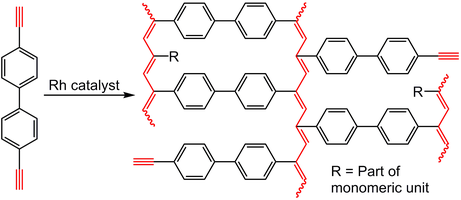
Functionalized polyacetylene-type polymers of various architecture, their preparation, modification, characterization and application.
People of the Group
Academic Staff









Our research interest
The development of porous materials with permanent micropores (diameter up to 2 nm) and/or mesopores (diameter 2 – 50 nm) and a large specific surface area (hundreds to several thousands m2/g) belongs to the most important scopes of the contemporary material research. The materials of this type are interesting for their catalytic and sorption applications. The micro/mesoporous materials could serve as heterogeneous catalysts or as supports for anchoring the homogeneous catalysts, however, they can also be used for gas trapping, separation and storage and for a selective adsorption of solutes from the solutions. In the last decade, the research in this field was extended by a new class of porous materials mostly referred to as “Microporous Organic Polymers” (MOPs). MOPs are hydrocarbon polymers often containing heteroatoms like O, N, F, S, Cl and possessing exclusively covalent bonding of the atoms and functional groups. Most MOPs have the architecture of polymer networks composed of densely cross-linked rigid segments. This architecture prevents a tight packing of the polymer segments which results in the formation of permanent micropores in the network. The formation of the mesopores in MOPs proceeds via a covalent interconnecting of small particles of microporous network.
Our group is interested in development and synthesis of conjugated MOPs and revealing the relations between the methods and conditions of the preparation on one side and structural, textural and functional parameters of the prepared MOPs on the other side. The conjugation contributes to the rigidity and porous texture of MOPs, moreover, thanks to a proper character of conjugation, MOPs can exhibit interesting functional properties such as photoluminescence. We apply mainly functional arylacetylenes as the building blocks and both catalyzed and catalyst-free chain-growth polymerizations and polycyclotrimerizations for their transformation into conjugated MOPs. The polymerizations require a proper tuning to provide MOPs with desirable amount and size of the pores. The chemical composition of the pore surface represents another variable important for the applications. The composition, structure and texture characteristics of MOPs are mostly obtained by means of IR, UV/VIS, fluorescence and 13C CP/MAS NMR spectroscopy, electron microscopy and adsorption techniques.
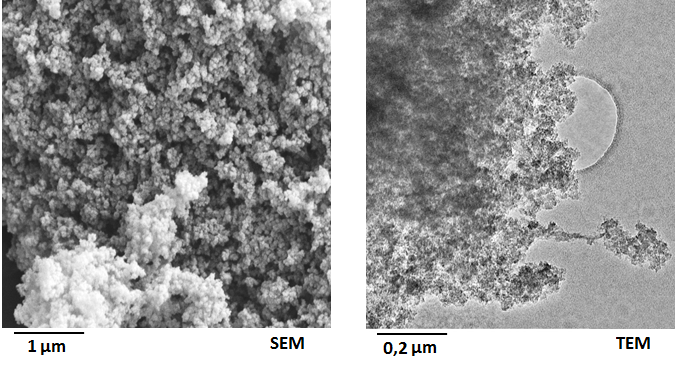
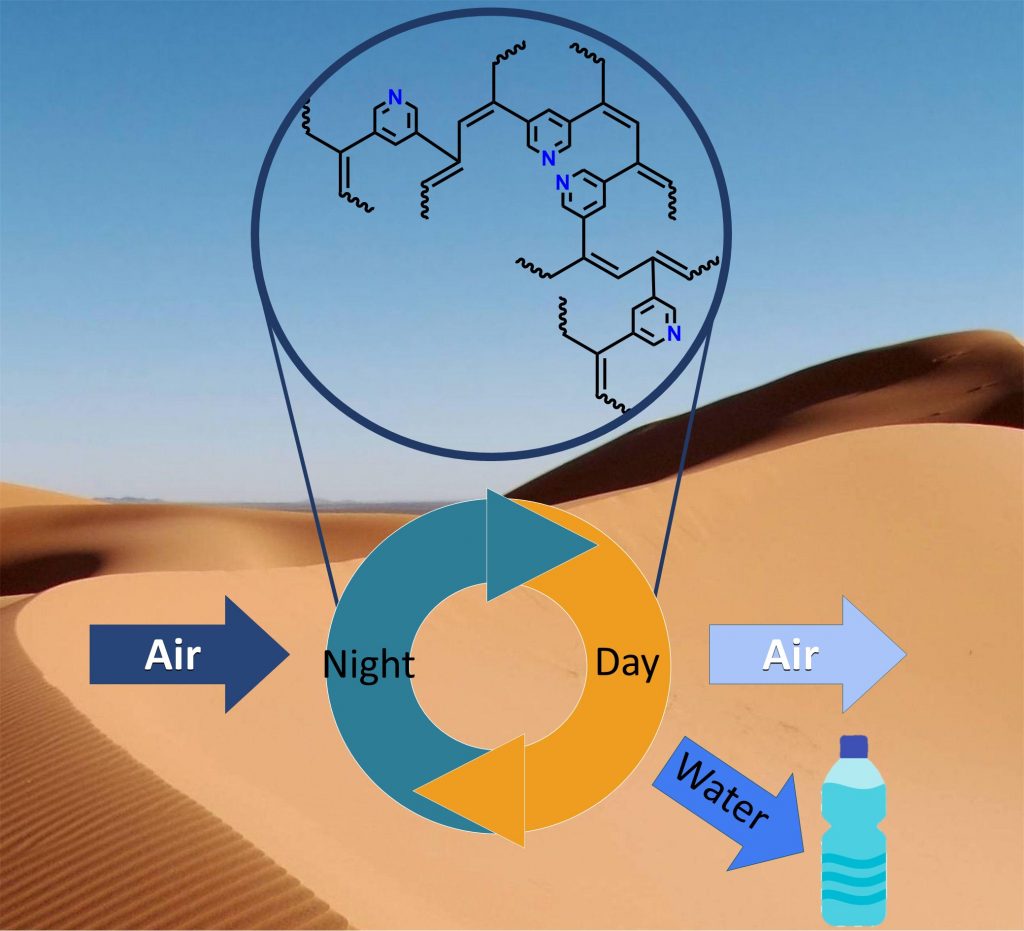
An important question is whether the MOPs prepared by us possess desirable functional properties. We are addressing this question within the framework of cooperation with various “friendly” institutions, for example: Jaroslav Heyrovský Institute of Physical Chemistry (The Czech Academy of Sciences) and University of Chemistry and Technology in Prague. And the answer? Some prepared MOPs exhibit a high adsorption capacity for carbon dioxide and vapor of lower alcohols, other MOPs are efficient organocatalysts. And still others: here an alternative procedure of the polymerization or a postpolymerization modification will be necessary to improve the functional properties. If you want to participate in solving these problems and develop your bachelor’s, master’s or doctoral thesis on the theme of MOPs, come and visit our laboratory.
Selected Publications
List of 31 publications
(5 currently shown)
Zinc(II) Ion Metallo-Supramolecular Polymers Are Promising Class of Material for Polymer Light-Emitting Devices’ Construction
Excited-state dynamics of colloidal gold nanoshells functionalized with trimethoxysilylazachalcones
Re‐Evaluation of the Applicability of Terpyridine as a Highly Selective Aqueous Colorimetric Sensor for Mercury
A brief guide to polymer terminology (IUPAC Technical Report)