Stabilization of metal nanoparticles by defects of 2D zeolites

Metal nanoparticles confined within zeolite pores exhibit enhanced catalytic activity, high sintering resistance, and uniform active sites distribution. However, their performance is often limited by diffusion constraints. A promising alternative …

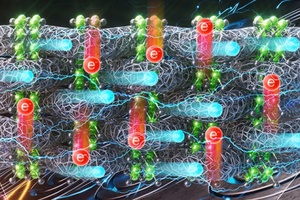
Ionization of weak polyelectrolytes in the semidilute and entangled regimes

The relationship between ionization and morphology in weak polyelectrolyte systems is complex and is influenced by external conditions such as pH, ionic strength, and polymer concentration. While extensive studies have …

Theoretical study of chemical reaction mechanisms

The necessity of transitioning to a sustainable society entails minimizing the negative impacts of the chemical industry on the environment and the need to search for new chemical reactions and …

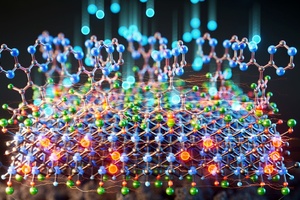
Design of nanomaterials by concerted structural and chemical modification of labile precursors

Due to molecular sieving effect, high adsorption capacity and adjustable chemical composition zeolites are efficient adsorbents and catalysts for a number of processes. However, there is still a lack of …

Design of advanced catalytic materials by top-down construction and crystal structure nano-architectonics

Zeolites hold a key position as heterogeneous catalysts and adsorbents due to their high surface area, molecular sieving effect, and versatility in chemical composition and structural topology. However, the hydrothermal …